 Escola Arquitetura e Urbanismo – UEMA - São Luís - Maranhão - Brasil
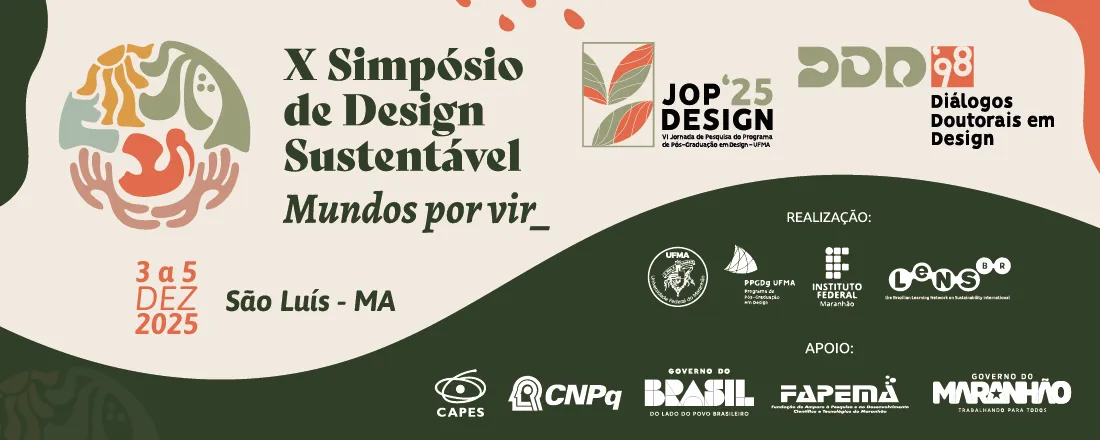
O décimo SDS – Simpósio de Design Sustentável + Sustainable Design Symposium será a primeira edição deste renomado e consolidado evento em nossa área a ser realizado na Amazônia Legal, região para a qual os olhos do mundo se dirigem. O evento será realizado exatamente após a 30ª Conferência da ONU sobre Mudanças Climáticas (COP30) que acontecerá em Belém. Como o campo do Design responde às mudanças climáticas, que são reflexos profundos de um impacto sem precedentes, do qual fazemos parte? Como pensamos as soluções para mitigar os impactos do Antropoceno (Creutzen; Stroemer, 2000; Noronha; Furtado, 2021), o qual também podemos nomear Capitaloceno (Haraway, 2021: Preciado, 2023), tendo em vista que o campo do design sempre esteve atrelado à práticas insustentáveis, como o extrativismo, à obsolescência programada, a geração de resíduos (Wright Mills, 2010; Fry, 2020)? É neste momento de emergência que convidamos a todos a pensarem que mundos estão por vir por meio de designs outros e novas formas de se pensar e realizar a sustentabilidade em projetos.
Nossa chamada temática para o debate baseia-se nas discussões críticas ao Antropoceno e dialoga com o livro Há mundo por vir? (2021) dos cientistas brasileiros Déborah Danowski e Eduardo Viveiros de Castro. Os autores trazem a consciência de que o grandioso projeto de “construção social da realidade” realizou-se sob a forma de destruição natural do planeta, suscitando uma angústia a respeito de uma ideia sobre o “fim do mundo”. Nossa resposta à inquietante pergunta dos autores é que sim, há mundo por vir, desde que redirecionemos a rota das pesquisas em design e sustentabilidade de forma crítica e reflexiva. Para além da divisão clássica do conceito de sustentabilidade, para fins pedagógicos, baseada em três dimensões: a econômica, a ambiental e a social (Manzini e Vezzolli, 2008), conclamamos as comunidades do design brasileiro e internacional, em especial a latino-americana, a complexificar o pensamento sobre o tema, pensando estas dimensões de forma imbricada e indissociável, apreendendo novas formas de estar com a natureza e ser natureza. Convidamos ao aprofundamento das pesquisas em design com mais que humanos, pensando os biomateriais, as economias e os territórios, levando à busca por um design ontológico, como nos propõe Arturo Escobar, em seu livro Diseño y autonomia (2016), envolvendo-nos com cosmovisões outras, com os movimentos sociais ligados à terra, povos indígenas, ribeirinhos, comunidades coletoras e quilombolas, mas não somente: com os animais, plantas e minerais.
Chamamos às reflexões sobre os impactos da produção industrial em massa, o ciclo de vida de produtos, os novos comportamentos de consumo para a sustentabilidade, os processos de desmaterialização do design ampliando as abordagens de criação de serviços, a transição energética e seus impactos na produção industrial. Estamos diante da mudança de um paradigma e precisamos nos reposicionar enquanto campo do saber que tradicionalmente esteve atrelado à produção industrial.
Antes de ser um limitador à produção acadêmica, a chamada temática é um convite para a presença de vozes, sonhos, histórias, materiais, materialidades e tecnologias para reimaginar este mundo em diversos outros, para juntos pensarmos o pluriverso (Escobar, 2016). Propomos um debate crítico acerca das questões multidimensionais da sustentabilidade, envolvendo a dimensão política, as questões relacionadas ao mundo do trabalho, os recortes de gênero, os debates pós-extrativistas, os comportamentos de produção e consumo, as poéticas e estéticas que promovem e dão corpo a esta discussão.


