 This is an online event
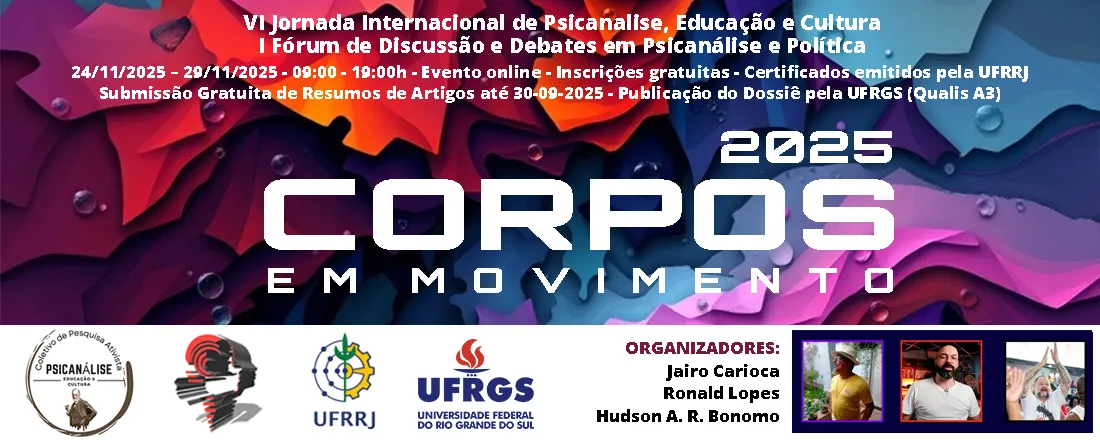
VI
Jornada Internacional de Psicanálise, Educação e Cultura
I Fórum de Discussão e Debates em Psicanálise e Política
ACESSO AS TRANSMISSÕES PELO WEBSITE: www.corposemmovimento.com.br
REGISTRO DE PRESENÇA: https://www.corposemmovimento.com.br/#/presenca
O corpo, como locus onde o sujeito (de)encontra o mundo ao seu redor, é o ponto de partida para um campo de possibilidades transformadoras. Corpo pertencente à gramática do desejo, surgindo como ato na linguagem que pela via da identificação se introduz na economia do gozo – corpo pulsional, provocado pelo Outro Real, representado ocasionalmente pela mãe, que institui o existente humano a partir de uma carência que é sua (do Outro), se instituindo pouco a pouco como sujeito do desejo. Que corpos são esses, atravessados por forças históricas, políticas e subjetivas? Que potências podem ser mobilizadas quando, na escuta psicanalítica, esses corpos fa(ca)lam e reinv(t)entam suas ex-sistências? Este encontro se propõe a pensar ações afirmativas e criativas que utilizem a psicanálise como ferramenta prática e simbólica de transformação social, buscando fortalecer a potência de sujeitos e comunidades a partir da singularidade de suas vivências corporais.
Seja o corpo biológico, objeto da medicina e de intervenções cirúrgicas, o corpo social, moldado pelas forças das normas coletivas, ou o corpo político, que se ergue como território de resistência e luta, todos carregam camadas de significação que ultrapassam seus limites aparentes. Mais que uma análise teórica, o desafio aqui é convocar práticas criativas que transformem essas dimensões em campos de ação, emancipação e desejo.
A psicanálise, desde Freud, nasceu como uma prática de escuta que se organizou no entrecruzamento do discurso e do corpo. É na relação entre a fisicalidade (Körper) e a vivência subjetiva (Leib) que o sintoma emerge, ressignificando experiências traumáticas e abrindo espaço para novos significados. Esse gesto fundador, político e clínico, oferece caminhos para transformar corpos silenciados/marginalizados em corpos potentes, capazes de criar e resistir. Que práticas afirmativas e criativas podem surgir desse encontro entre corpo e linguagem? Como essas práticas podem responder aos desafios contemporâneos, especialmente no Brasil, onde corpos periféricos, racializados e dissidentes enfrentam a exclusão social e as necropolíticas?
O CHAMADO: RESUMOS ESTENDIDOS (ATÉ 500 PALAVRAS) PARA COMPOSIÇÃO DE MESAS DE DEBATE E PUBLICAÇÃO EM 2026 EM PARCERIA COM A UNIVERSIDADE FEDERAL DO RIO GRANDE DO SUL (UFRGS - REVISTA QUALIS A3)
Essas contribuições poderão estar nas mesas da nossa Jornada em forma de comunicação oral e/ou textos que irão ser publicados (na íntegra) a posteriori em Revista QUALIS A3, e comporão um dossiê de diálogos com a psicanálise visando promover justiça, igualdade e transformação.
Envie sua contribuição de acordo com os eixos abaixo e seja parte desta construção coletiva!
Corpos em Movimento 2025 busca teorias ou reflexões acadêmicas que utilizem a psicanálise como força emancipadora. Estamos em busca de experiências transformadoras que, por meio da escuta e da linguagem, promovam autonomia, revelem a potência e a força criativa nos sujeitos. É a partir do agir criativo que pretendemos construir um espaço de resistência, acolhimento e reinvenção de corpos, corpas e subjetividades.
Buscamos textos que demonstrem como a psicanálise pode se articular com práticas artísticas, educativas, comunitárias e políticas para gerar impacto social. Exemplos incluem clínicas sociais voltadas para populações vulneráveis, programas de escuta em escolas e periferias, iniciativas artísticas que valorizem as narrativas corporais, ações afirmativas com devires-outros como populações LGBTQIAPN+, trans, migrantes e pessoas com deficiência, etarismo. O objetivo é transformar corpos normatizados, estigmatizados, silenciados ou apagados em territórios de desejo, resistência e criação.
O
CORPO COMO CAMPO DE TRANSFORMAÇÃO
Na contemporaneidade, a psicanálise é convocada a pensar não apenas o corpo do sintoma, mas também o corpo como território de cruzamentos simbólicos, políticos e criativos. Em tempos marcados pela hiperconectividade, pela violência sistêmica e pelas políticas de exclusão, os corpos emergem como espaços de confronto e potência.
O corpo-fronteira, que habita os limites entre o psíquico e o social, carrega marcas históricas e culturais que narram exclusões e resistências. Ele é um corpo-rizoma, cujas conexões tensionam normas e abrem novas possibilidades de existência. É também o corpo-desejante, que encontra na psicanálise um espaço para rearticular memórias, traumas e fantasias, produzindo novas formas de ser e estar no mundo.
O Brasil, como território marcado pela desigualdade e pelo racismo, nos apresenta um desafio inescapável: pensar práticas psicanalíticas que respondam às demandas de populações excluídas e marginalizadas, espaço onde podemos voltar a ser pretos, ser trans, ser LGBTQIAPN+, ser mulher e devires-outros. Desde as primeiras clínicas sociais até os projetos contemporâneos de inclusão, a psicanálise tem sido chamada a agir diante de crises e violências sociais, tornando-se uma ferramenta de resistência e transformação. A subversão é chave. Abram os portões!
LINHAS DE AÇÃO: OS EIXOS TEMÁTICOS
O eixo Corpo Clínico explora práticas médicas humanizadas que colocam a subjetividade no centro do cuidado, abordando desde os impactos do trauma em doenças autoimunes até saberes ancestrais como alternativas de cura e transformação. Este eixo convida a submissão de projetos, artigos, resenhas, textos, resumos que promovam, por exemplo, programas de suporte clínico para pacientes em cuidados paliativos, ações afirmativas que integrem práticas terapêuticas tradicionais de populações indígenas e quilombolas no cuidado comunitário, ou iniciativas interdisciplinares que utilizem a escuta psicanalítica em redes de apoio para pessoas com doenças crônicas ou em transição de gênero.
No Corpo Estético e Tecnológico, são discutidas as influências dos padrões estéticos globais e locais na subjetividade, a presença do corpo digital nas redes sociais e no metaverso, e as transformações das corporeidades na arte, na mídia e na cibercultura. Exemplos de ações afirmativas incluem oficinas que utilizem avatares digitais para ressignificar identidades corporais de jovens em situação de vulnerabilidade, projetos artísticos comunitários que explorem a relação entre corpo e estética em contextos periphéricos, ou ainda programas educativos que problematizem o impacto dos padrões de beleza veiculados pela mídia. Este eixo também convida a submissão de artigos, resenhas, textos e resumos.
O eixo Corpo e Trabalho foca nas condições de precarização e desgaste do corpo no trabalho informal, na experiência de corpos transculturais em contextos migratórios e na mercantilização do corpo no consumo cultural. Serão bem-vindas propostas como redes de suporte psicanalítico para trabalhadores precarizados, oficinas de narrativas para migrantes que reflitam sobre suas experiências corporais transculturais, ou ações voltadas para conscientização sobre os impactos do capitalismo na alienação e desgaste físico e mental no ambiente de trabalho. Textos, artigos, resumos, resenhas também são bem-vindos.
Em Corpo e Educação, o foco está nas pedagogias do corpo que articulam a expressão física com o desenvolvimento subjetivo, nas relações entre gênero e sexualidade no ambiente escolar, e no papel do corpo na formação docente. Projetos esperados incluem práticas educativas voltadas à inclusão de crianças trans e não binárias em escolas, programas de formação docente que abordem a subjetividade do corpo no aprendizado, ou iniciativas que utilizem o movimento e a expressão corporal como ferramentas pedagógicas para promover a integração social. Textos, artigos, resumos, resenhas também serão acolhidos.
O eixo Corpo Histórico e Antropológico aborda o corpo como locus de memória e narrativa, considerando suas dimensões ritualísticas, espirituais e culturais. Práticas religiosas, rituais ancestrais, modificações corporais e expressões de identidade são temas centrais que articulam as relações entre corpo, saúde coletiva e saberes transmitidos ao longo das gerações. Exemplos de ações afirmativas incluem projetos que resgatem práticas rituais afro-brasileiras como formas de fortalecimento identitário em comunidades marginalizadas, iniciativas voltadas para a valorização da memória corporal em comunidades indígenas, ou oficinas de dança e moda que celebrem narrativas corporais históricas e culturais. Textos, artigos, resumos, resenhas também serão acolhidos.
No Corpo Político e Marginalidades, o corpo é pensado como território de resistência frente às necropolíticas, destacando a inclusão de corpos marginalizados, como pessoas negras, trans, LGBTQIAPN+, migrantes e com deficiência. Este eixo espera receber propostas como a criação de espaços de escuta para corpos dissidentes em periferias urbanas, ações artísticas que denunciem a violência contra corpos marginalizados, ou projetos que integrem a psicanálise em redes de apoio à acessibilidade e inclusão de pessoas com deficiência no mercado de trabalho ou em atividades culturais. Textos, artigos, resumos, resenhas também são bem-vindos
Por fim, o Corpo Subjetivo e Psicanálise se concentra no corpo como expressão do inconsciente e palco do sintoma, articulando as dimensões do corpo-desejante, do corpo como território de transformação e das práticas psicanalíticas que potencializam a emancipação subjetiva. Propostas esperadas incluem ações afirmativas que utilizem a escuta psicanalítica em comunidades periphéricas para ressignificar traumas coletivos, programas de atendimento psicanalítico a populações trans e LGBTQIAPN+ com foco na subjetividade do corpo, ou iniciativas que utilizem a linguagem da psicanálise para criar espaços de desejo e transformação existencial, tanto individuais quanto coletivos. Textos, artigos, resumos, resenhas também são bem-vindos.
Equipe
Organizacional
Jairo Carioca de
Oliveira (http://lattes.cnpq.br/0980633135143495)
Doutorando e Mestre em Educação Contemporânea e Demandas Populares (PPGEduc/UFRRJ). Teólogo e Pesquisador na interface entre Psicanálise e Feminismos Plurais – Estudos de Gênero no Laboratório de Educação, Gênero e Sexualidades da UFRRJ, no Grupo de Pesquisa Ativista Audre Lorde da UNIR e no Diversitas - FFLCH/USP. Coordenador do Coletivo de Pesquisa Ativista em Psicanalise, Educação e Cultura, Membro no Coletivo Psicanalistas Unidos pela Democracia – PUD e Membro da Comissão Permanente da Política Institucional pela Diversidade, Gênero, Etnia/Raça e Inclusão (CPID) da UFRRJ. Escritor por diversas Editoras no Brasil, Poeta e Bolsista CAPES.
Ronald Lopes de
Oliveira (http://lattes.cnpq.br/4038397101084710)
Doutorando em História (UERJ). Mestre e Licenciatura em História (UNIRIO). Pós-graduado em Psicanálise e Saúde pelo (SEPAI-RJ). Pós-graduado em Orientação, Supervisão e Gestão Escolar (UNINTER). Pós-graduado em Ciências da Religião (AVM/UCAM). Bacharel em Teologia (FACETEN). Psicanalista e Pesquisador no Laboratório de Educação, Gênero e Sexualidade da UFRRJ, no Grupo de Pesquisa Ativista Audre Lorde/UNIR e no Grupo ÁFRICAS Sociedade, Política e Cultura (UERJ-UFRJ). Coordenador do Coletivo de Pesquisa Ativista em Psicanálise, Educação e Cultura.
Hudson A. R. Bonomo (http://lattes.cnpq.br/1803722800530346)


