 Reitoria da UFMG - Belo Horizonte - Minas Gerais - Brazil | Brasil
Dia 11 de junho de 2025 - De: 16h30min às 17h30min - Auditório da Reitoria da UFMG
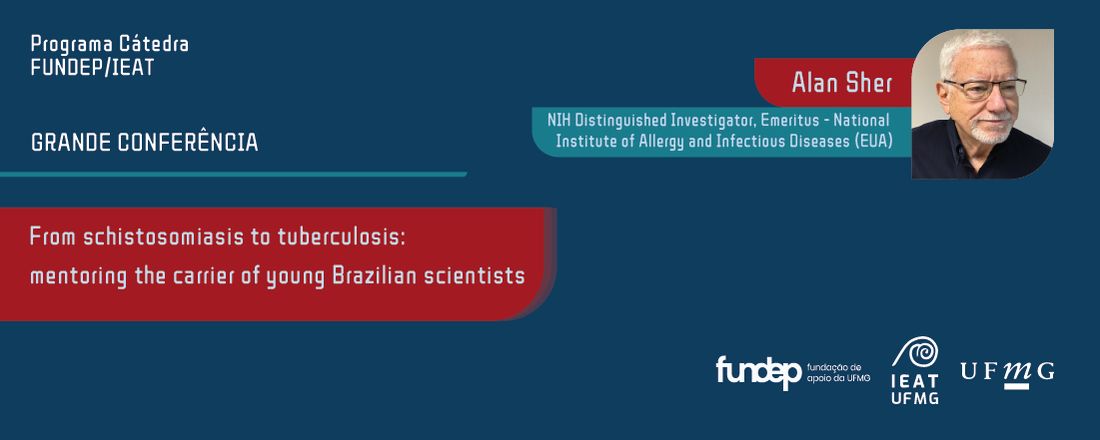
Dr. Sher has significantly advanced our understanding of the mechanisms by which the immune response can both protect against parasitic infections and, if overstimulated, cause harm to the host. His work contributed to establishing the in vivo dichotomy of CD4+ T helper lymphocytes. His laboratory demonstrated that liver granuloma formation and disease caused by Schistosoma mansoni are mediated by Th2 lymphocytes—the same subset involved in allergic responses. In the leishmaniasis model, he showed that Th1 and Th2 lymphocytes are responsible for mediating resistance and susceptibility, respectively. In the mouse model of toxoplasmosis, his group revealed that while Th1 lymphocytes are critical for protection, the cytokine IL-10—traditionally seen as immunoregulatory—is essential for preventing excessive and harmful immune responses, thus ensuring effective protection. More recently, Dr. Sher has focused on the mechanisms of innate resistance to Mycobacterium tuberculosis. By defining the cellular and molecular pathways involved in the induction and regulation of immune responses, overall these studies have yielded novel insights relevant to prevent or treat both infectious and sterile inflammatory diseases. Throughout his career, Dr. Sher has collaborated with numerous Brazilian scientists and played a pivotal role in mentoring over ten brazilian young scientists involved in these landmark studies, many of whom have gone on to become influential scientific leaders in Brazil.
O Dr. Alan Sher contribuiu significativamente para o avanço da nossa compreensão sobre os mecanismos pelos quais o sistema imunológico protege contra infecções parasitárias, mas também, se estimulado excessivamente, pode causar danos ao hospedeiro. Seu trabalho foi fundamental para o estabelecimento da dicotomia dos linfócitos T auxiliares CD4+ in vivo. Demonstrou que a formação do granuloma hepático e a doença causada pelo Schistosoma mansoni são mediadas por linfócitos Th2 — o mesmo subtipo envolvido em respostas alérgicas. No modelo de leishmaniose cutânea, ele demonstrou que os linfócitos Th1 e Th2 são responsáveis por mediar, respectivamente, a resistência e a suscetibilidade à infecção. No modelo murino da toxoplasmose, seu grupo demonstrou que, embora os linfócitos Th1 sejam essenciais para a proteção, a citocina IL-10 — tradicionalmente considerada imunorregulatória — é fundamental para evitar respostas imunes excessivas e prejudiciais, garantindo, assim, uma proteção eficaz. Mais recentemente, Dr. Sher concentrou-se nos mecanismos de resistência inata ao Mycobacterium tuberculosis. Ao definir as vias celulares e moleculares envolvidas na indução e regulação da resposta imune, esses estudos ofereceram novos insights relevantes para a prevenção e o tratamento de doenças inflamatórias de origem infecciosa, e também de origem estéril. Ao longo de sua carreira, por quase 50 anos, o Dr. Alan Sher colaborou com diversos cientistas brasileiros e desempenhou um importante papel na formação de mais de dez jovens pesquisadores brasileiros, envolvidos nesses estudos fundamentais, que se tornaram líderes científicos influentes no Brasil.
